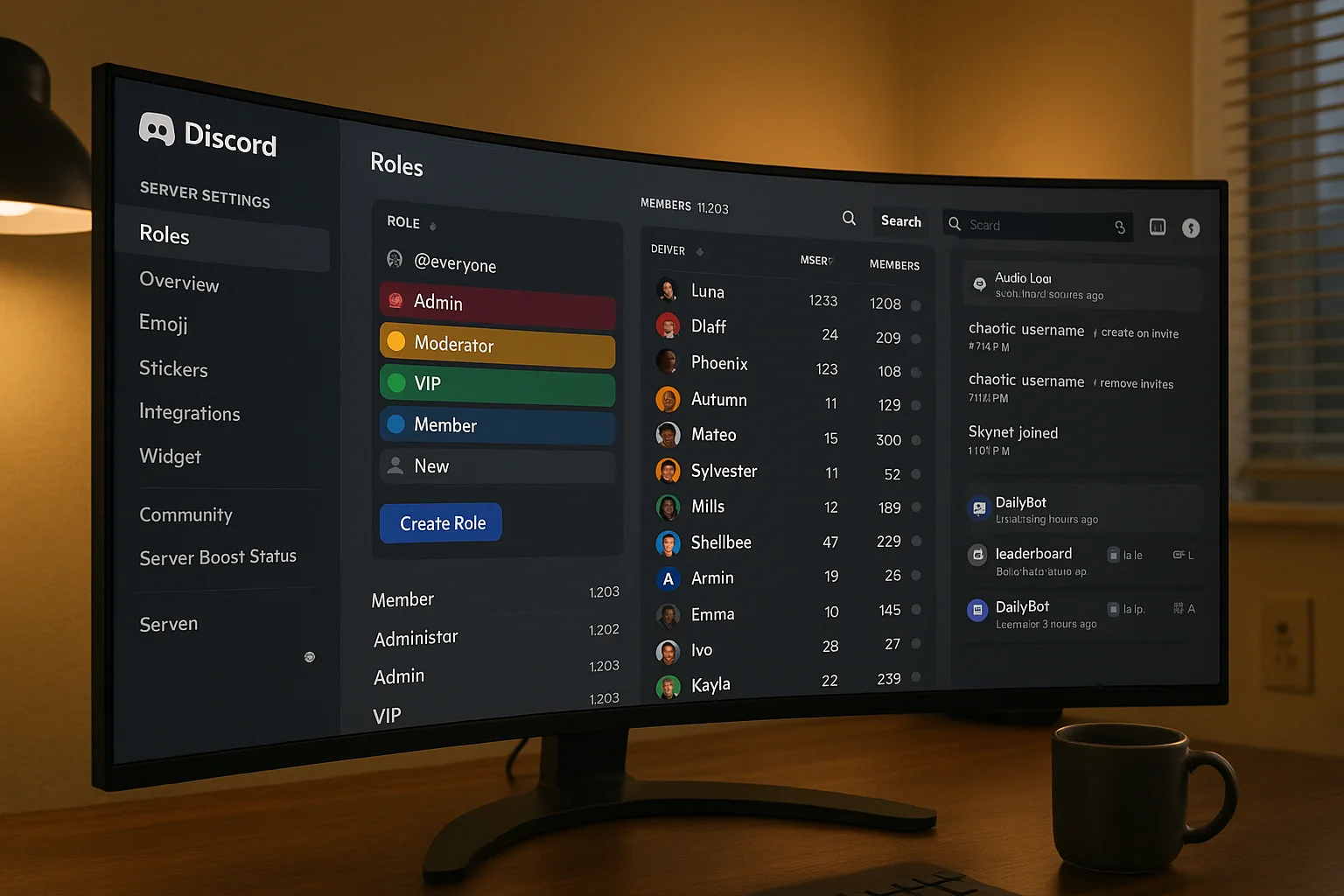
Paid community automation is the system that runs your membership without daily manual work: granting access the moment someone pays, onboarding new members with structured welcome sequences, recovering failed payments before they become cancellations, and removing access cleanly when a subscription ends. It works across every major platform including Skool, Whop, Discord, Telegram, and Circle.
This is the hub guide for paid community automation. It covers the four automation layers every paid community needs, the order to build them in, what each one is worth in recovered revenue and reduced churn, and links to the detailed platform-specific guides.
The four layers of paid community automation
Layer 1: Access control
The foundation everything else depends on. When someone pays, they get access instantly. When they cancel or a payment fails, access is removed on schedule. No manual checking, no delay, no ex-members still getting value from a community they stopped paying for.
What access control handles:
- Instant role or access grant on successful payment
- Role removal on subscription cancellation at end of billing period
- Role removal on failed payment after a configurable grace period
- Role swap on tier upgrade or downgrade
- Immediate access removal on refund
This is a one-time build with near-zero ongoing maintenance. Every paid community needs access control running before anything else is added.
Layer 2: Member onboarding
The first seven days of a membership determine whether someone stays or cancels at end of month one. Members who receive a structured welcome, understand where to go first, and complete a meaningful first action within 24 hours renew at significantly higher rates than members who join to silence and have to figure things out themselves.
Onboarding automation covers:
- Welcome DM within minutes of access being granted -- introduces the community, highlights key areas, prompts a specific first action
- Day 3 check-in: "Have you introduced yourself? Here is the most active thread this week"
- Day 7 message: "You have been a member for a week. Here is what most members find most valuable"
- Parallel email sequence for members who are less active on the platform itself
This is typically the highest-ROI automation layer. A five percentage point reduction in 30-day churn at $5,000 MRR is worth around $3,000 per year in retained subscriptions, compounded every billing cycle.
Layer 3: Failed payment recovery
Around 9% of subscription payments fail every month from expired cards, insufficient funds, and bank transaction blocks. Most of these members did not intend to cancel. A dunning automation contacts them immediately after the failure, keeps access active during a grace period, and recovers 60 to 75% of those payments before removal is triggered.
The automated recovery sequence:
- Day 0: Payment fails. Discord DM and email sent immediately with payment update link.
- Day 2: Follow-up with increased urgency and a prominent link.
- Day 4: Final warning that access will be removed that day.
- Day 4 end: Role removed if payment is still outstanding. Win-back sequence starts.
Communities with no recovery system lose the full 9% monthly to involuntary churn. Communities with immediate dunning automation recover the majority of it. At $10,000 MRR, that difference is worth over $10,000 per year.
Layer 4: Community operations
The ongoing layer that keeps your community active without daily manual effort:
- Scheduled content: daily signals, weekly recaps, announcements that fire automatically at the right time
- Engagement triggers: if a member has not posted in 21 days, send a re-engagement DM with something relevant
- Milestone recognition: 30-day and 90-day member messages that run automatically
- Admin dashboards: auto-updated sheets showing active members, revenue status, and failed payments pending
Build order: what to automate first
- Access control first. Without this, every other layer is unreliable. Build it before growing your membership.
- Onboarding second. Highest direct impact on retention. A structured first week keeps members long enough to see the value.
- Failed payment recovery third. Highest direct impact on revenue. Once members are paying, protect that recurring revenue from involuntary loss.
- Operations last. Add this incrementally once the core membership lifecycle is automated.
Platform-specific automation guides
The four layers apply across every community platform. The technical implementation differs by platform.
Discord:
- Connect Stripe to Discord for automatic paid role assignment
- Automate Discord roles for tiers, renewals and removals
- Handle renewals, failed payments and cancellations in Discord
- Full Stripe Discord membership lifecycle guide
- Discord community automation: the 7 things worth building
Whop:
Skool:
- Skool automation: payments, access and member removal
- Skool community onboarding automation
- Skool Zapier integration: what is possible in 2026
Telegram:
Circle and comparing platforms:
The automation stack
A fully automated paid community runs on three components:
- Payment processor (Stripe): handles billing, subscriptions, and fires webhook events for every payment action
- Automation layer (n8n): receives Stripe events, executes access control, runs onboarding sequences, manages dunning workflows
- Community platform: Discord, Skool, Whop, Telegram, or Circle -- the environment where members gather
This stack runs without human input once it is built. The only regular task is reviewing your admin dashboard for anomalies and creating content for your community.
Build it yourself or get it done for you
The full stack is buildable without code using n8n's visual workflow editor. Layers 1 through 3 take 6 to 10 hours for someone new to n8n. Layer 4 is added incrementally over time.
Want this set up correctly without the trial and error? We do payment-to-access automation for paid communities in 7 days. Book a free audit.