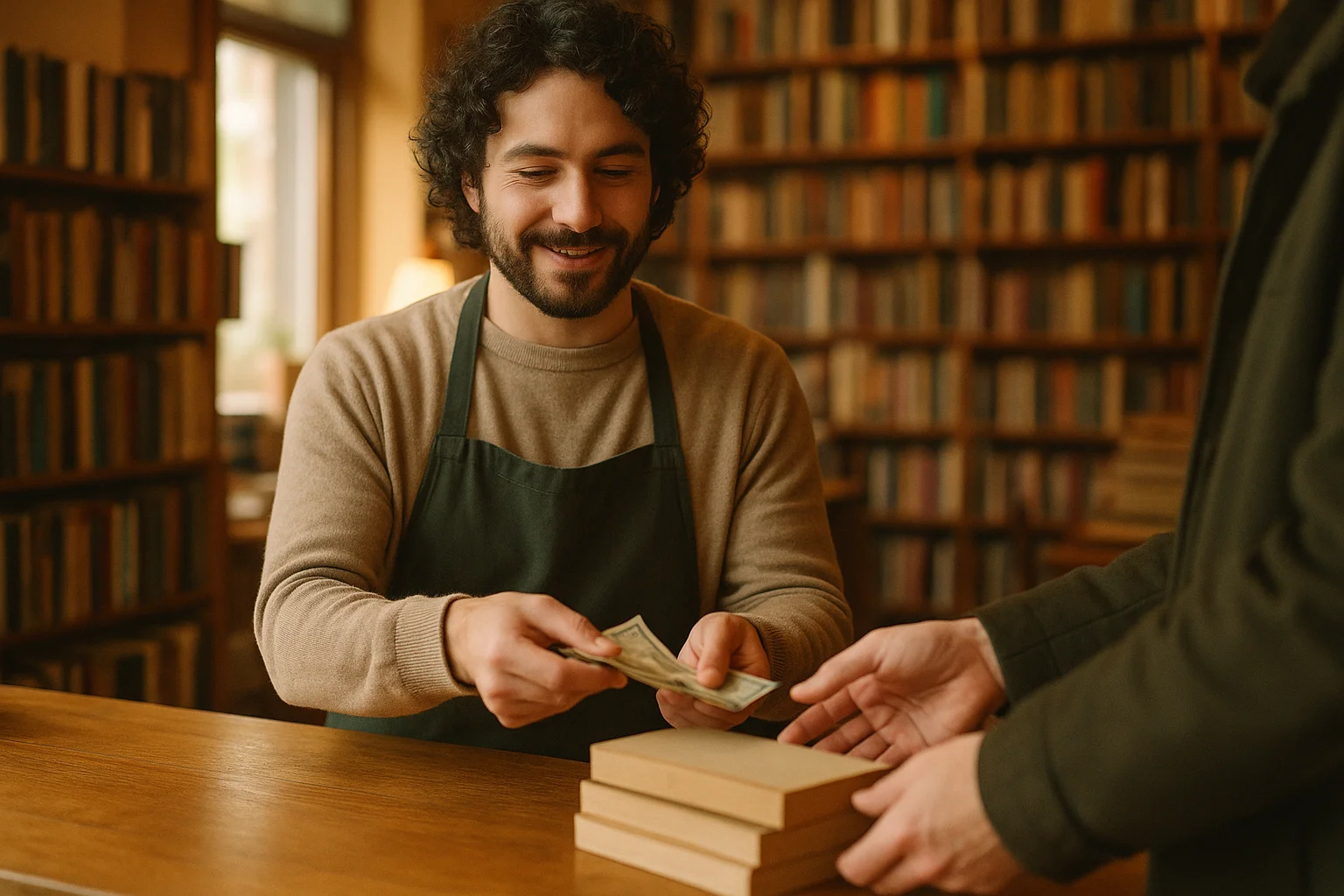
If you're clearing out a bookshelf and want cash in hand today, the good news is you have more options than you think. Search "sell books near me" and you'll usually find at least one used bookstore or trade-in counter within a short drive, and if you're open to waiting a few extra days, online buyers almost always pay more per book. This guide walks through the realistic ways to sell books for cash, both locally and online, and what actually determines how much a buyer will offer.
Local Used Bookstores: Cash on the Spot
The classic answer to "where to sell old books" is still the neighborhood used bookstore. Most independent shops will look through a box or bag of books while you wait and offer either store credit or straight cash, with credit usually running 20-30% higher than the cash offer. Chains like Half Price Books work the same way: bring books in, get an offer within 15-20 minutes, walk out with money.
Best for: people who want money today and don't mind that the per-book payout is lower than online marketplaces. It also works well for books in rough shape (highlighting, water damage, missing dust jackets) that online buyers would reject outright.
A few things that improve your odds at a local shop:
- Call ahead or check the store's site for what genres they're currently buying -- many stores are overstocked on paperback fiction and self-help but short on cookbooks, art books, or recent nonfiction.
- Bring books in reasonably clean condition. Torn covers and heavy notes will get passed over even if the store buys that genre.
- Ask for cash specifically. Some stores default to offering store credit unless you ask.
Online Buyback Sites: Slower, Usually Higher Payouts
If a book is worth more than a few dollars, online buyback sites will almost always beat a local counter offer. Sites like BookScouter let you scan or enter an ISBN and instantly compare offers across dozens of vendors, so you're not guessing which site pays best for that specific title. Once you accept an offer, most sites mail you a free prepaid shipping label, and payment (check, PayPal, or direct deposit) typically lands within a week or two of them receiving and verifying the books.
Best for: textbooks, recent editions, and anything with a barcode. Online buyers pay by exact edition and ISBN, so a book that's basically worthless to a local shop (an outdated but still-in-demand college textbook, for example) can be worth real money to the right online buyer.
Popular resale marketplaces (eBay, Amazon's seller program, Facebook Marketplace) are a different lane entirely -- you set your own price and handle listing, shipping, and buyer questions yourself, which takes longer but can net more for collectible or rare titles than any buyback program will offer.
Library Book Sales and Consignment Drop-Off
Public libraries and Friends of the Library groups regularly run donation-funded book sales, and many accept walk-in drop-offs year-round, not just cash offers but also tax-deductible donation receipts if you'd rather not deal with pricing individual books. Some larger library systems and used bookstores also run consignment programs: you leave books with them, they price and sell them, and you get a cut (often 40-60%) once a book sells. It's slower money than a same-day cash offer, but it can beat a lowball trade-in price for books a store wasn't willing to buy outright.
Best for: large collections you're not in a rush to liquidate, or books local buyback shops declined but that still have resale value to the right reader.
Local vs. Online: Speed vs. Price
| Option | Payout Speed | Typical Payout | Best For |
|---|---|---|---|
| Local used bookstore | Same day | Low (cents to a few dollars/book) | Quick cash, mixed-condition books |
| Book store that buys books (chain, e.g. Half Price Books) | Same day | Low to moderate | Large mixed lots, no shipping hassle |
| Online buyback (BookScouter, etc.) | 1-2 weeks | Moderate to high, especially textbooks | Textbooks, recent editions, ISBN lookups |
| Marketplace resale (eBay, Amazon) | Varies, days to months | Highest for rare/collectible books | Sellers willing to list and ship themselves |
| Library sale / consignment | Weeks to months | Low direct, or 40-60% of eventual sale | Large collections, no rush |
Selling Books Back to Amazon
"Amazon sell back books" is one of the most searched ways to sell books online, and for good reason -- Amazon's trade-in and third-party seller programs are the biggest single marketplace for used books, with the largest buyer pool of any option on this list. You can sell books to Amazon two ways: through Amazon's own trade-in program (when it's running for a given category, it pays in Amazon gift card credit, not cash) or by listing books yourself as a third-party seller on Amazon's marketplace (you set the price, ship it yourself, and get paid directly). The trade-in route is faster and requires no listing work; selling as a third-party seller usually nets more money but takes longer and requires you to handle shipping and customer questions yourself. For the full step-by-step walkthrough of both routes, see our guide on how to sell books on Amazon.
How to Sell Books Online, Step by Step
If you want the highest payout and don't need cash today, selling books online follows the same basic sequence no matter which site you use:
- Scan or enter each book's ISBN. Use a free ISBN lookup tool to confirm the exact edition and pull up comparison pricing across vendors before you commit to any single site.
- Compare buyback offers, not just one site. Prices for the same ISBN can vary significantly between BookScouter's vendor network, Amazon trade-in, and Chegg -- always check more than one before accepting an offer.
- Decide buyback vs. marketplace listing. Buyback sites pay instantly (once they receive and verify the book) but usually less. Listing on eBay or Amazon yourself takes longer but nets more for books in good condition or with resale demand.
- Ship with the provided label. Most buyback programs mail a free prepaid shipping label once you accept an offer -- pack books securely to avoid a downgraded payout for shipping damage.
- Get paid. Payment (PayPal, direct deposit, or check depending on the vendor) typically arrives within one to two weeks of the buyer receiving and verifying your books.
This process works the same whether you're selling used books individually or clearing an entire shelf at once -- the only real decision is which vendor to sell to, and that comes down to comparing offers rather than defaulting to the first site you think of.
What Actually Determines the Price
Whether you're negotiating in person or getting quoted a number online, the same handful of factors drive what a book is worth:
Demand right now: A textbook assigned this semester or a book currently trending will pay more than the exact same title a year from now.
Edition and ISBN: Online buyers price by the specific printing. A newer edition of a textbook can be worth 5-10x an older one, even if the content barely changed.
Condition: Writing, highlighting, water damage, and missing components (CDs, access codes, dust jackets) all reduce the offer, sometimes to zero.
How full a buyer's shelves already are: This mostly affects local stores. A shop that already has fifteen copies of a bestseller in stock will offer little to nothing for another one, even in great condition.
Rarity and collectibility: First editions, signed copies, and out-of-print titles are the exception to "buyback sites pay best" -- these usually sell for more on marketplaces or through specialty dealers who know their true value.
Want a custom tool built that checks book prices across every vendor automatically instead of one at a time? We build price-tracking and scanning automations like this. Get in touch.
Bottom Line
If you need cash today, start local: a used bookstore or a book store that buys books like Half Price Books will pay on the spot, even if the per-book number is modest. If you're willing to wait a week or two for a bigger payout, especially on textbooks or recent editions, compare offers online before you box anything up. And for anything low-value or in rough shape that no one wants to buy outright, a library book sale drop-off turns clutter into a tax deduction instead of a trip to the recycling bin.
Want to check a book's value right now? Try our free ISBN Lookup & Book Value Checker -- enter any ISBN and compare prices across Amazon, eBay, AbeBooks, and BookScouter instantly.
Related: How to Sell Textbooks Online for the Most Money (2026 Guide) | ISBN Lookup: How to Check Any Book's Value Instantly | Friends of the Library Book Sales: The Best-Kept Secret for Cheap Books