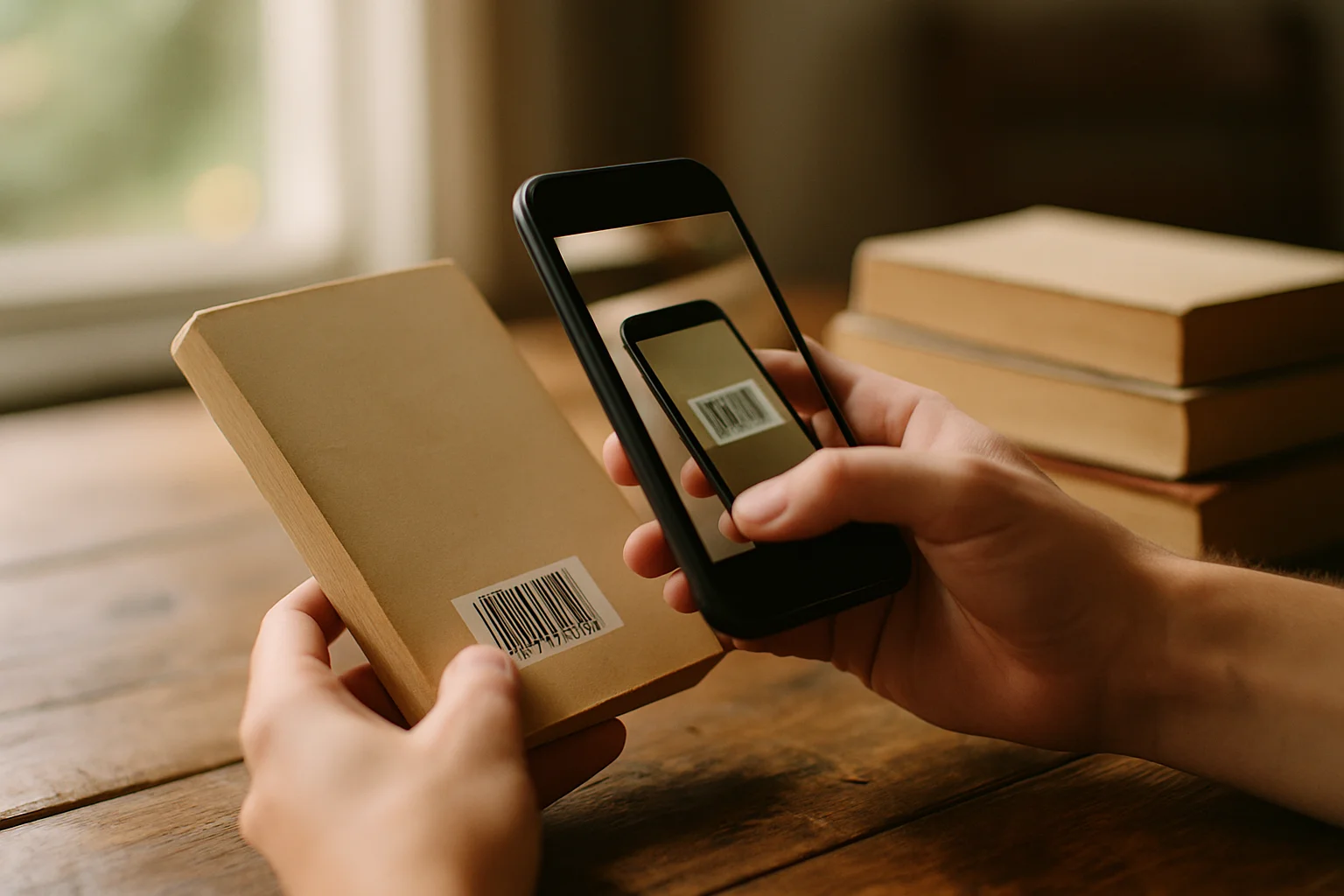
You just pulled a book off a shelf at a garage sale, thrift store, or your own bookshelf, and you're wondering if it's worth anything. The fastest way to find out is an isbn lookup: scan or type the 10 or 13-digit number on the back cover, and within seconds you'll see what the book is selling for across multiple marketplaces. No guessing, no flipping through price guides -- just a number that tells you the real story.
What Is an ISBN, and Why It Matters for Pricing
Every book published since the late 1960s has an International Standard Book Number (ISBN) printed near the barcode on the back cover or copyright page. It's a unique fingerprint for that exact edition of that exact book -- hardcover and paperback versions of the same title have different ISBNs, and so do different printings. That specificity is exactly why a book isbn lookup is more reliable than searching by title alone: search by title and you might get pricing for the wrong edition, wrong format, or a completely different book with a similar name.
How ISBN Lookup Tools Actually Work
When you run an isbn number lookup, the tool takes that number and cross-references it against live listings and sold-price data on sites like Amazon, eBay, AbeBooks, and specialty textbook buyback vendors. Instead of you opening ten browser tabs and searching each site manually, the lookup tool does it in one pass and hands you a price range. Some tools show current asking prices, others show what buyback vendors will actually pay you in cash right now -- those are two very different numbers, and it's worth knowing which one you're looking at.
Scanning vs. Typing: Which Is Faster
If you've got a stack of books in front of you, typing every ISBN by hand gets old fast. This is where an isbn scanner earns its keep. Most phones can scan a barcode using the camera through a dedicated isbn scanner app, pulling the number automatically instead of you squinting at tiny digits. For a single book, typing is fine. For a box of twenty, scanning saves real time and avoids typos that send you to the wrong listing.
| Method | Best For | Speed | Accuracy |
|---|---|---|---|
| Manual ISBN entry on a website | One-off checks | Slow for multiple books | High, if typed correctly |
| ISBN scanner app (phone camera) | Stacks of books, garage sales | Fast | High, no typos |
| Dedicated barcode scanner device | Frequent resellers, high volume | Fastest | Very high |
| Amazon seller app lookup | Checking Amazon-specific pricing | Fast | High, Amazon data only |
Checking Amazon Prices Specifically
Amazon is often the first place people think to check, and for good reason -- it's the largest used book marketplace out there. An amazon isbn lookup through the Amazon Seller app or a third-party ISBN tool will show you what other sellers are currently asking for that exact edition, plus Amazon's own sales rank, which is a rough signal of how often that book actually sells. A book listed at $40 that hasn't moved in months isn't necessarily worth $40 -- the sales rank tells you whether that price is realistic or aspirational.
Tip: Compare the lowest few 'used - acceptable' and 'used - good' prices on Amazon, since that's the price band your book will actually compete in once you list it.
Free vs. Paid ISBN Lookup Options
Most ISBN lookup tools worth using are free, including Amazon's own listing pages, Google Books, and several dedicated ISBN lookup sites. Paid tiers usually exist for bulk scanning, inventory management, or pulling data across dozens of vendors at once, which matters more if you're reselling books as a business rather than checking one paperback from your shelf. For a casual check, you shouldn't need to pay anything.
What Makes a Book Worth More
Edition and printing: First editions, especially of popular or literary titles, are worth significantly more than later printings.
Condition: A cracked spine, water damage, or heavy highlighting drops the price fast, even if the ISBN says the book is otherwise valuable.
Textbook edition currency: Textbooks lose value quickly once a newer edition is published, so check the ISBN carefully to confirm which edition you're holding.
Demand right now: A course-required textbook is worth more in August and January than in June, when nobody's buying it.
A Quick Workflow for Checking a Stack of Books
Grab your phone, open an ISBN scanner app, and scan the barcode on each book's back cover. For anything that scans with a promising price, do a quick manual amazon isbn lookup to confirm the current asking price and sales rank before deciding whether to list it, sell it to a buyback vendor for instant cash, or donate it if it's not worth the listing effort.
Wrapping Up
An isbn lookup takes the guesswork out of pricing secondhand books. Whether you're clearing out a shelf, hunting for resale flips at a thrift store, or just curious what an old textbook is worth, scanning the ISBN and checking a couple of sources gives you a real answer in under a minute. The habit is simple: scan first, decide second.
Want a custom tool built that checks book prices across every vendor automatically instead of one at a time? We build price-tracking and scanning automations like this. Get in touch.
Want to check a book's value right now? Try our free ISBN Lookup & Book Value Checker -- enter any ISBN and compare prices across Amazon, eBay, AbeBooks, and BookScouter instantly.
Related: Best Book Scanning Apps for Resellers in 2026 (ScoutIQ, BookScouter, Neatoscan Compared) | How to Flip Books for Profit: A Beginner's Guide to Book Reselling | Where to Sell Books Near You (and Online) for Cash