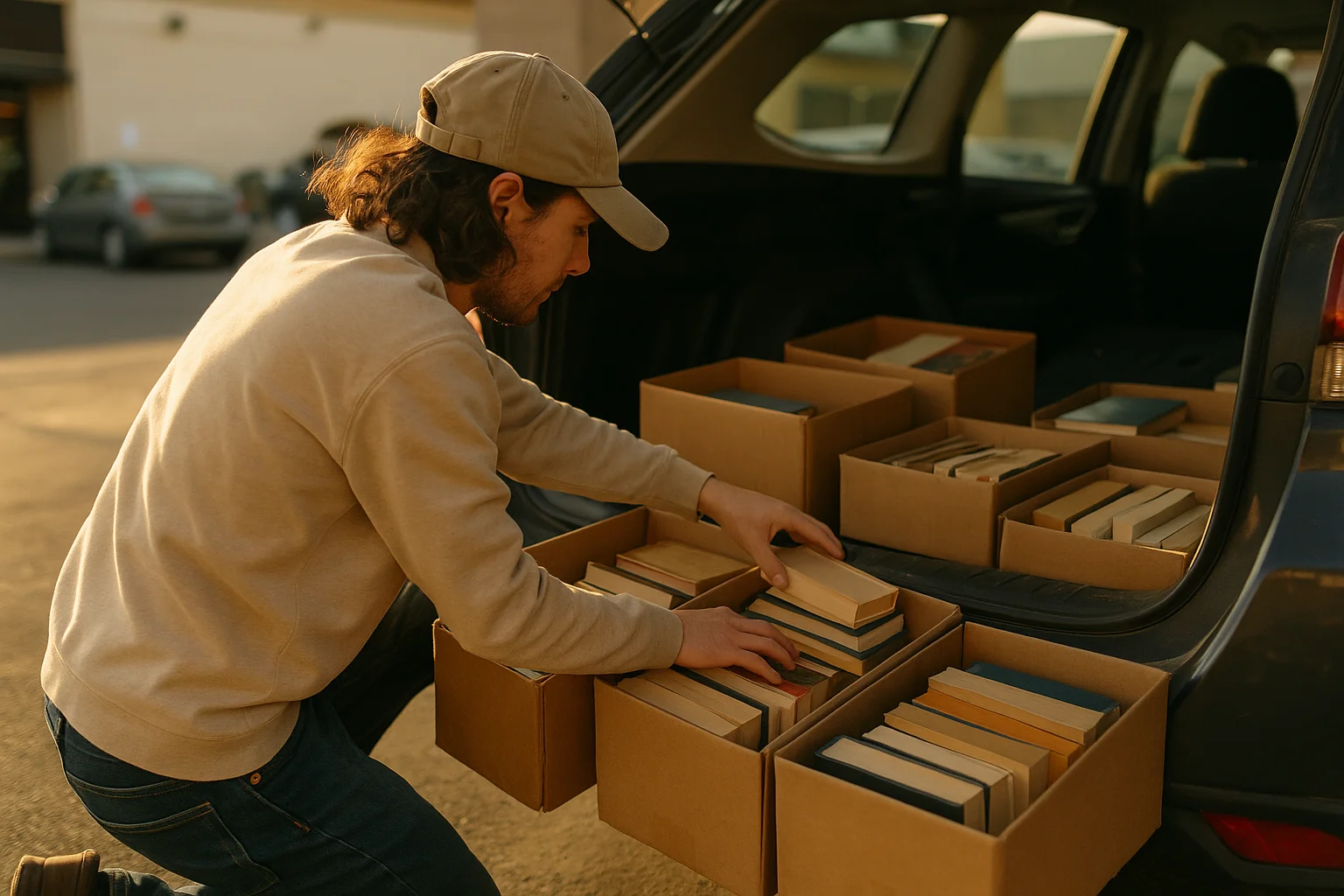
If you have ever wondered how to flip books for profit, the short answer is that it is one of the most accessible side hustles you can start with almost no money down. Book arbitrage, buying underpriced books at thrift stores, library sales, and garage sales, then reselling them on Amazon or eBay for a markup, has quietly supported thousands of part-time resellers for years. It does not require inventory space, employees, or a storefront. It requires a phone, a little patience, and a system for knowing which books are actually worth picking up.
What Book Arbitrage Actually Is
Book arbitrage is simple in concept: you buy a book for less than it is worth and sell it somewhere it is worth more. The price gap exists because most people selling used books, thrift stores, estate sale organizers, library volunteers, have no idea what any individual title is actually worth on the resale market. A $1 bin at a Goodwill might contain a textbook that sells for $40 on Amazon, sitting right next to ten other books worth exactly what you paid for them.
This is different from retail arbitrage in electronics or toys because books have an unusually wide value spread. A book's resale value depends on edition, condition, demand, and how many other sellers currently have copies listed. That variability is exactly what creates the opportunity, but it also means Tip: you cannot judge a book's value by its cover price, age, or how nice it looks. You have to check.
Where to Source Cheap Books
The best sourcing locations for a book reselling business tend to be the ones with the least organized pricing:
- Thrift stores. Goodwill, Savers, and local charity shops are the most consistent source. Prices are usually flat per category, so a $2 mass-market paperback sits next to a $2 first-edition hardcover with no distinction.
- Library sales. Friends of the Library sales, often held quarterly or annually, are one of the best-kept secrets in this business. Withdrawn library books and donations are sold in bulk, sometimes by the bag, and volume pricing makes even modest hit rates profitable.
- Garage and estate sales. Less predictable, but sellers at these events are often even less aware of book values than thrift store staff, and you can negotiate directly.
- Online liquidation and clearance. Some resellers supplement in-person sourcing with library discard programs or bulk lots from other sellers clearing inventory.
Textbooks deserve a special mention. College towns near the start or end of a semester are reliable hunting grounds, since students dump textbooks for cash regardless of what they are actually worth on the buyback market.
How to Check Resale Value Before You Buy
This is the single most important skill in this business, more important than sourcing location, negotiation, or listing quality. Buying blind is how beginners lose money.
Before you buy any book, scan the ISBN barcode with a scouting app and check three things: the current sell-through rate, the number of competing sellers, and the actual price range across conditions. A book that looks valuable but has 40 sellers already listing copies at $3 is not worth your money, no matter how nice the cover is. Conversely, a beat-up paperback with only two other listings and steady sales at $18 is exactly what you are looking for.
Tip: set yourself a simple rule before you start scanning, for example, only buy if the lowest current price is at least 4x what you are paying, and the book has sold within the last 30 days. Rules like this stop you from talking yourself into marginal purchases in the moment.
Also pay attention to edition and format. Textbook editions change constantly, and an outdated edition can be worth a fraction of the current one. International editions, ex-library copies with stamps, and book club editions all sell for less than standard first-party copies, even when the content is identical.
Where to Sell for the Best Margin
Amazon is the default marketplace for most book resellers because of its massive built-in buyer base and the FBA program, which lets you ship inventory to Amazon's warehouses and let them handle picking, packing, and shipping. If you are figuring out how to make money selling books on Amazon, the two paths are Fulfilled by Merchant, where you ship each order yourself, and Fulfilled by Amazon, where you send in bulk and Amazon handles fulfillment for a fee.
eBay works well for books that do not fit neatly into Amazon's used-book condition categories, rare or collectible editions, signed copies, or sets that sell better as a bundle with photos and a description rather than a standard listing. Specialty marketplaces and direct buyback programs are worth checking too, particularly for textbooks, where a guaranteed instant payout can beat a slow Amazon sale if you value speed over margin.
Whichever platform you choose, price competitively against the current lowest comparable listing rather than anchoring to what you paid. Your cost basis is usually low enough that even the current floor price leaves you a solid margin.
Realistic Profit Expectations for Beginners
Most beginners overestimate how fast this scales and underestimate how much time scanning takes. In your first few months, expect a hit rate, the percentage of scanned books actually worth buying, somewhere between 5 and 15 percent depending on your sourcing locations. Average profit per book for casual resellers typically lands between $3 and $15, with occasional higher-value finds pulling the average up.
A realistic part-time goal is $200 to $600 per month working a few hours a week at thrift stores and library sales, treating it as a genuine book reselling business rather than a get-rich-quick scheme. Resellers who go full-time and scale into bulk sourcing, wholesale lots, and FBA logistics can push well past that, but it takes months of consistent sourcing and reinvestment to get there.
Is This Worth It?
Book flipping is worth trying if you enjoy the hunt and can commit to actually checking values before you buy, rather than guessing. It is a genuinely low-risk way to start a resale side hustle: the entry cost is a phone and a scanning app, and you can start with $20 in inventory to test the process before committing more. It is not worth it if you are looking for passive income or a quick payout. The margin comes from the research step, not from luck, and beginners who skip that step tend to end up with a garage full of unsellable books instead of profit.
Scaling past a hobby? We build custom tools that check resale value across vendors automatically so you can source faster without guessing. Get in touch.
Want to check a book's value right now? Try our free ISBN Lookup & Book Value Checker -- enter any ISBN and compare prices across Amazon, eBay, AbeBooks, and BookScouter instantly.
Related: ISBN Lookup: How to Check Any Book's Value Instantly | Best Book Scanning Apps for Resellers in 2026 (ScoutIQ, BookScouter, Neatoscan Compared) | Friends of the Library Book Sales: The Best-Kept Secret for Cheap Books