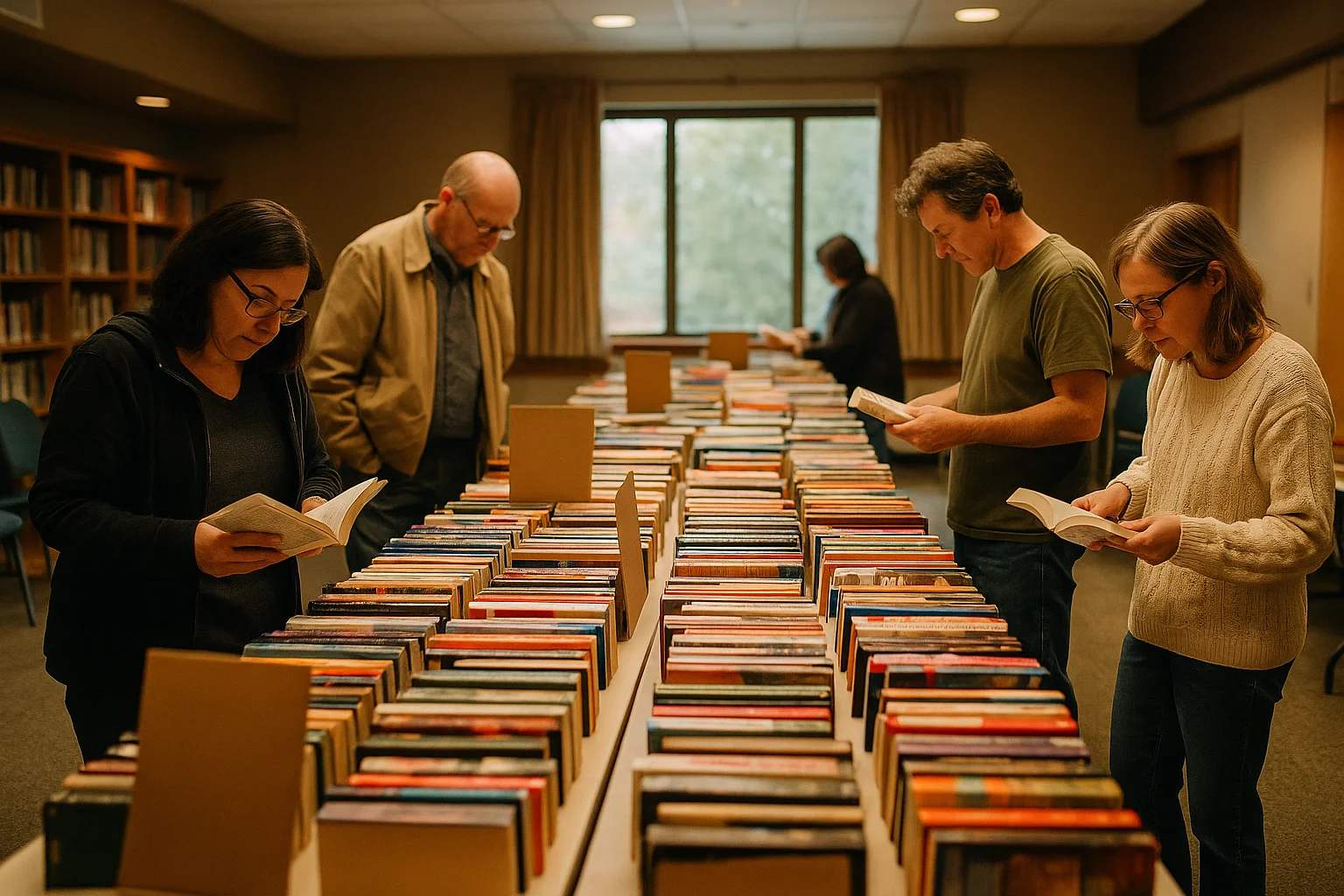
If you've never been to a friends of the library book sale, you're missing one of the cheapest ways to build a bookshelf or, if you're a reseller, source inventory. These fundraising sales are run by volunteer "Friends" groups that support their local library, and they turn a steady stream of donated books into $1-2 paperbacks, $3-5 hardcovers, and bag sales where you can stuff as many books as fit for a flat fee. Bargain hunters love them for the price. Resellers love them because the volume and turnover mean genuinely valuable books slip through at garage-sale prices almost every week somewhere in the country.
What Is a Friends of the Library Book Sale?
Most public libraries have a nonprofit "Friends of the Library" group attached to them. These volunteers collect book donations from the community (and often overflow/withdrawn stock from the library's own collection), sort it, and sell it back to the public. The proceeds fund things the library's budget doesn't cover: children's programming, summer reading prizes, new furniture, extra museum passes, and sometimes even building renovations. It's a genuinely good cause, which is part of why these sales are so cheap -- the goal is to move inventory and raise money, not maximize per-book profit.
Sales range wildly in size. Some are a couple of folding tables in a library lobby, running for a Saturday afternoon. Others are massive multi-day warehouse events with tens of thousands of books, run by county-wide Friends organizations with their own storage space and sorting systems. Both are worth your time, but the bigger ones tend to have deeper nonfiction, reference, and collectible sections.
How to Find a Library Book Sale Near You
Finding a local library book sale used to mean checking bulletin boards. Now most groups post online, but the information is scattered across a few different places, so it pays to check more than one source.
| Where to Look | What You'll Find |
|---|---|
| Your library's own website/events page | Official dates, hours, and any preview-day rules |
| Book Sale Finder (booksalefinder.com) | A crowdsourced national calendar, still the best single resource for a public library book sale near me search |
| Facebook groups (search "Friends of [City] Library") | Local Friends groups post reminders, photos, and sometimes early-bird details here before anywhere else |
| Local library systems' newsletters | Many counties run a rotating calendar across branches -- sign up so you don't miss a smaller one |
| Nextdoor and community bulletin boards | Great for hyper-local sales that never make it onto national sites |
Tip: Bookmark Book Sale Finder and check it on a rolling basis rather than once. Smaller Friends groups often add their listing only a week or two out.
Insider Tips for Finding Valuable Books at These Sales
The reason a friends of the library book sale is worth the drive isn't just the $1 paperbacks -- it's that donated collections are unsorted by value. Someone's entire personal library, including first editions, signed copies, and out-of-print nonfiction, can end up mixed in with beach reads and old textbooks. A little strategy goes a long way.
Go early, and go on day one if you can. The best material gets picked over fast, especially at sales that attract regular resellers. If a sale runs multiple days, the first morning is when the shelves are fullest and least picked through.
Check the "boutique" or "collectibles" table first. Larger sales often pull out books the volunteers suspect are valuable and price them separately, sometimes below what they're actually worth because volunteers aren't professional appraisers.
Scan for hardcovers with intact dust jackets. A clean dust jacket can multiply a hardcover's resale value several times over, and it's an easy visual filter when you're moving fast through hundreds of spines.
Don't ignore nonfiction and textbooks. Fiction gets picked clean quickly, but specialized nonfiction, technical manuals, cookbooks, and recent-edition textbooks are often overlooked by casual buyers and can be worth far more than their sale-table price.
Bring a scanner app. If you're buying to resell, a quick barcode scan against current buyback and marketplace prices takes the guesswork out of a $1 bin. It turns "is this worth grabbing" into a five-second decision instead of a gut call.
Talk to the volunteers. They often know when the next batch of donations is going out, whether there's unsorted overflow in the back, and when the sale restocks tables throughout the day.
Pricing and Formats: Bag Sales, Preview Days, and Best Times to Go
Understanding the format of a given sale helps you plan the right visit for what you're after.
Opening day / general admission: Standard per-item pricing, usually $1-3 for paperbacks and $2-5 for hardcovers. This is when selection is best but prices are highest.
Member preview days: Many Friends groups offer an early-access day or evening for paid members (memberships are often just $10-25 a year and pay for themselves in one good sale). If you go to sales regularly, joining the local Friends group is one of the best moves you can make -- first pick, before the doors open to the public.
Bag sale / half-price days: Toward the end of a multi-day sale, prices usually drop, culminating in a bag sale where you fill a provided grocery bag or box for a flat $5-10. This is the moment for volume buyers and resellers, since the per-book cost can drop under a dime if you fill the bag efficiently.
Fill-a-box finales: Some larger sales end with a "fill a box for $10" or even "everything free" clearance to clear remaining inventory before the next donation cycle. Ask the volunteers what the last day looks like -- it's rarely advertised as clearly as the opening.
Tip: If you only have time for one visit, weekday afternoons midway through a multi-day sale tend to have the best mix of remaining selection and lower foot traffic than the opening weekend rush.
Wrapping Up
A friends of the library book sale is one of the few places left where a genuinely great find is still possible for a dollar or two, and where every purchase supports the library itself. Whether you're building a personal collection or sourcing inventory to resell, the formula is the same: find the sales near you, show up early when you can, and pay attention to what's actually on the shelves instead of just the price tag.
Sourcing books at scale? We build custom tools that check ISBN prices across vendors automatically so you know what's worth grabbing before you buy. Get in touch.
Want to check a book's value right now? Try our free ISBN Lookup & Book Value Checker -- enter any ISBN and compare prices across Amazon, eBay, AbeBooks, and BookScouter instantly.
Related: How to Flip Books for Profit: A Beginner's Guide to Book Reselling | Best Book Scanning Apps for Resellers in 2026 (ScoutIQ, BookScouter, Neatoscan Compared) | ISBN Lookup: How to Check Any Book's Value Instantly