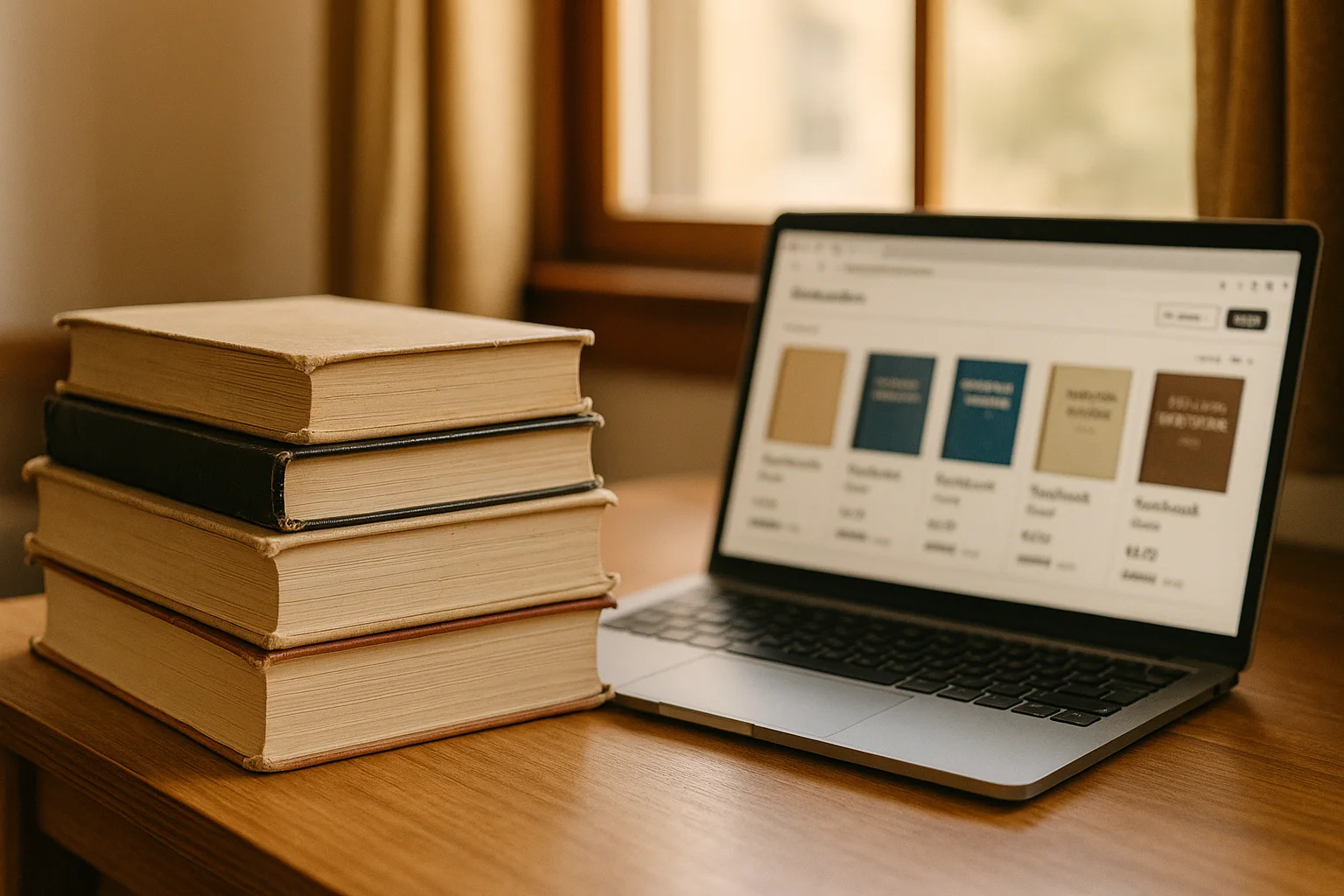
If you want to sell textbooks online for real money instead of pocket change, the trick isn't picking one site and hoping for the best -- it's comparing prices across multiple buyers before you ship anything. Every semester, students leave hundreds of dollars on the table by selling to the first offer they see instead of checking two or three more. This guide walks through exactly where to sell textbooks, how the payout math works, and which platform tends to pay the most for which kind of book.
Why Textbook Prices Vary So Much Between Sites
Every book buyback site sets its own price based on current demand, how many copies it already has in stock, and whether a new edition is about to replace the one you're holding. That's why the same book can be worth $45 on one site and $12 on another the same week. Prices also shift fast -- a book that pays well in December might be worth half that by February once the semester's demand dries up. This is exactly why checking multiple vendors before you sell textbooks online is the single biggest lever you control.
Where to Sell Textbooks: The Main Options
Amazon Trade-In and Marketplace: Amazon buys back a rotating list of eligible titles for Amazon gift card credit, and you can also list books yourself as a third-party seller for cash. Trade-in is fast and requires no listing effort, but gift card credit isn't cash, and payouts are usually lower than selling direct.
Chegg Books: Chegg made its name renting textbooks to students and also runs a buyback program. It's convenient and reliable, but its offers are often on the lower end compared to aggregator sites that shop your ISBN around automatically.
BookScouter: Rather than buying books itself, BookScouter compares offers from more than 30 vendors at once when you enter an ISBN. This is usually the fastest way to find the best place to sell textbooks without checking each site manually, since it surfaces the highest bidder instantly.
Campus Bookstore: Selling back at the campus bookstore is the most convenient option -- no shipping, no waiting, cash or store credit on the spot. The tradeoff is that bookstores buy at wholesale prices and often cap how many copies of a given title they'll accept, so payouts are typically the lowest of any option.
| Where to Sell | Payout Speed | Typical Payout | Best For |
|---|---|---|---|
| Amazon | 1-2 weeks (trade-in) or once sold (marketplace) | Medium (marketplace) / Low (trade-in credit) | Niche or high-demand titles sold direct |
| Chegg | 1-2 weeks after shipping | Low-Medium | Convenience, no comparison shopping |
| BookScouter | Varies by vendor chosen | Medium-High | Comparing every buyer at once |
| Campus Bookstore | Instant | Low | Same-day cash, no shipping |
How to Sell Textbooks for the Most Money, Step by Step
Step 1: Find your ISBN. It's the 10 or 13-digit number on the copyright page or back cover. Different editions of the same title have different ISBNs and very different values, so always double-check you're pricing the exact edition you own.
Step 2: Check multiple vendors before committing. Run the ISBN through an aggregator like BookScouter, then spot-check Amazon and Chegg directly. Prices can swing by $20-$50 per book, so this step alone is often worth more than any other single decision you make.
Step 3: Sell before edition changes hit. Publishers release new editions on a predictable cycle, and once a new edition ships, the old one's resale value drops fast. If you know a new edition is coming, sell in the weeks right after finals rather than waiting.
Step 4: Check condition requirements before you ship. Highlighting, water damage, missing access codes, and loose bindings can all drop or void an offer. Read the condition guidelines on whichever site you choose before boxing anything up.
Step 5: Compare shipping costs, not just sale price. Some buyback sites include free prepaid shipping labels; others deduct shipping from your payout. A slightly lower offer with free shipping can beat a higher offer that costs you $8 to mail.
Common Mistakes That Cost Students Money
Selling too late is the biggest one -- textbook demand drops off a cliff within a few weeks after the semester ends, so the sooner you sell after your last exam, the better your offer. Selling to the first site you find without comparing is the second biggest, since payouts genuinely vary that much between vendors. And selling books with expired access codes or missing CDs without disclosing it can get an order rejected entirely, so always check what's actually included before listing.
Want a custom tool built that checks book prices across every vendor automatically instead of one at a time? We build price-tracking and scanning automations like this. Get in touch.
Wrapping Up
There's no single best place to sell textbooks for every book -- the right answer depends on the title, the edition, and how fast you need the cash. The habit that actually makes a difference is comparing offers across a few sites before you commit, since that alone can be the difference between $15 and $60 for the same book. Do that consistently every semester and selling textbooks online stops being a chore and starts being one of the easiest side incomes a student has.
Want to check a book's value right now? Try our free ISBN Lookup & Book Value Checker -- enter any ISBN and compare prices across Amazon, eBay, AbeBooks, and BookScouter instantly.
Related: Sell Textbooks to Amazon vs Chegg vs BookScouter: Which Pays More? | Textbook Buyback Programs Compared: Amazon, Chegg, BookScouter, Barnes & Noble | ISBN Lookup: How to Check Any Book's Value Instantly