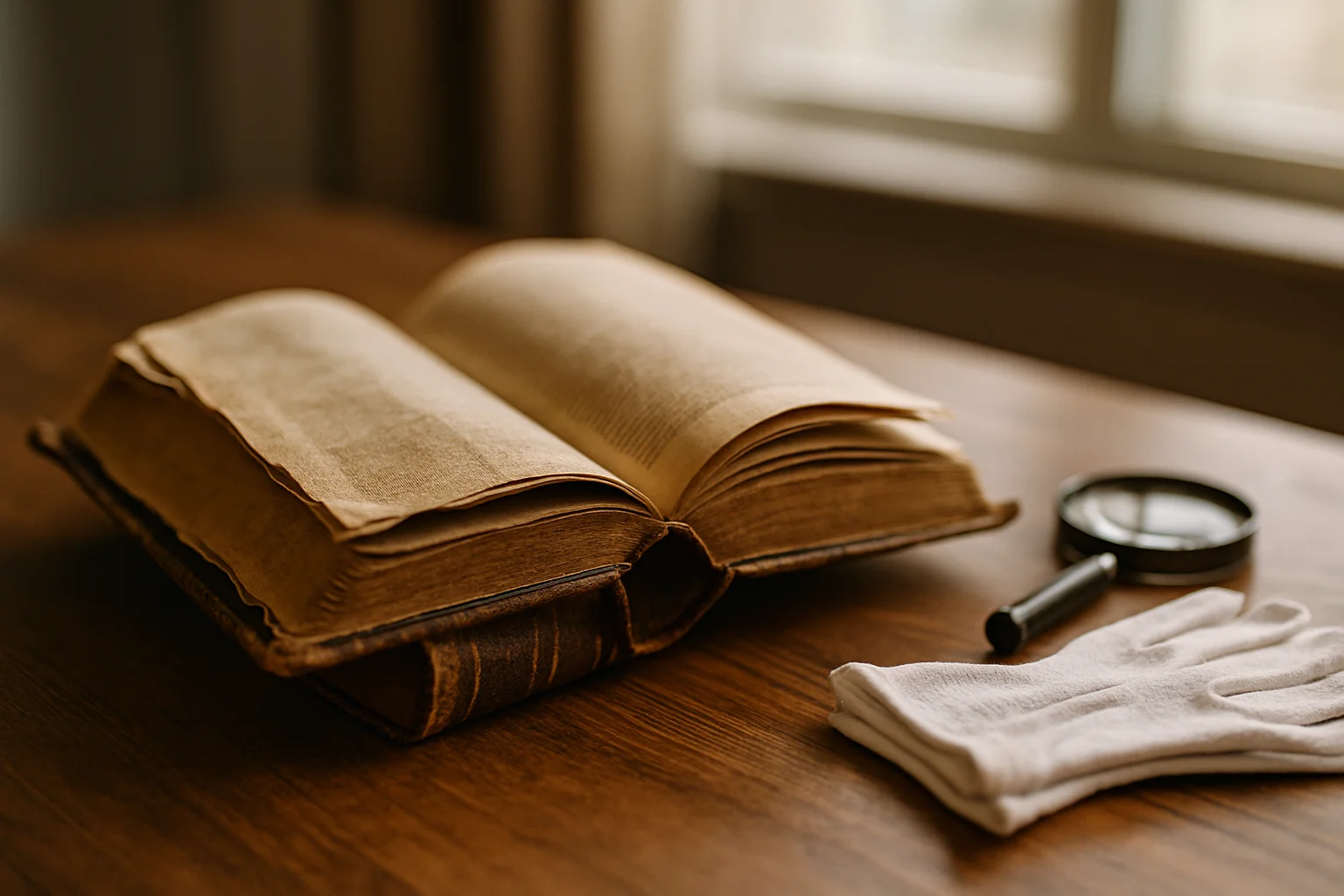
If you've just inherited a box of old books or found a first edition tucked away on a shelf, your first question is probably simple: is this worth anything, and if so, where do I sell it? Learning how to sell rare books starts with understanding that most "old" books aren't actually valuable, but the ones that are can be worth hundreds or even thousands of dollars once you know what to look for and where to find the right buyer.
What Makes a Book Valuable
Age alone doesn't make a book rare or valuable. Collectors and dealers look at a specific combination of factors, and a book missing even one of them can drop dramatically in price. Before you start researching where to sell vintage books, it helps to understand what actually drives value.
Look for: first edition status, author signatures or inscriptions, an intact original dust jacket, tight binding with no water damage, and genuine scarcity (a small original print run or a book that was widely destroyed or banned).
First Editions: The Biggest Value Driver
A true first edition, especially a first printing, is usually the single biggest factor in a book's value. Publishers often print the same title for decades, and only the earliest run typically carries meaningful collector value. A first edition of a beloved or culturally significant novel can be worth ten to a hundred times more than a later printing of the exact same text.
That said, "first edition" gets misused constantly by sellers who don't know better, which is exactly why buyers pay a premium for one that's been properly verified.
Signed and Inscribed Copies
An author's signature can multiply a book's value several times over, particularly if the author is deceased, rarely signed books during their lifetime, or if the inscription is dated and tied to a specific meaningful event. A signature alone is good; a signature plus a first edition plus a clean dust jacket is where real money starts to show up. Be cautious, though: unverified signatures are common, and a forged or unauthenticated signature can actually hurt resale value if a buyer later disputes it.
Condition and the Dust Jacket
Condition is judged on a fairly standard scale running from Poor to Fine, and it applies separately to the book itself and to its dust jacket. For 20th-century books especially, the dust jacket can account for 70-80% of the total value. A pristine first edition with no jacket is often worth a fraction of the same book with an intact, unclipped jacket.
| Factor | Impact on Value |
|---|---|
| First edition, first printing | High |
| Author signature/inscription | High |
| Original dust jacket present | High (especially post-1900 titles) |
| Binding tightness, no foxing or water damage | Moderate to High |
| Later printing or book club edition | Low, often minimal value |
Avoid cleaning, repairing, or rebinding an old book before you sell it. Well-meaning restoration (tape on a torn jacket, a home rebind, erasing an inscription) almost always reduces value in the eyes of serious collectors, who prefer honest, untouched condition over an amateur fix.
How to Identify a First Edition
Every publisher marks first editions differently, so there's no single universal rule. Common signs include a number line on the copyright page that includes a "1" (or starts at "1" or "2"), the words "First Edition" or "First Printing" printed on the copyright page, or a lack of any later printing statements. Older or foreign publishers may use entirely different conventions. Because of this, cross-referencing the specific publisher and title against a bibliography or dealer reference guide is the only reliable way to confirm what you actually have before you list it for sale.
Where to Sell Rare Books
Once you know roughly what you're holding, the venue you choose matters as much as the book itself. Different buyers specialize in different value tiers, and matching your book to the right one usually means a better price and a faster sale.
Rare Book Dealers
Specialist dealers, often members of the Antiquarian Booksellers' Association of America (ABAA) or the International League of Antiquarian Booksellers (ILAB), are usually the best route for genuinely valuable or unusual books. They can properly authenticate an edition, offer a fair cash price outright, or sell on consignment for a percentage. Reputable dealers also have established collector networks, which matters enormously for niche or highly specialized titles that wouldn't move well on a general marketplace.
Specialized Online Marketplaces
If you're wondering where to sell rare books yourself, sites like AbeBooks, Biblio, and Vialibron are built specifically for antiquarian and collectible books, with buyers who already understand edition points, condition grading, and fair pricing. Listing here reaches a far more targeted (and more willing to pay) audience than a general bookselling platform aimed at textbooks or bulk paperbacks.
Auction Houses for High-Value Finds
For books that could realistically fetch four or five figures, such as significant first editions, historically important volumes, or exceptional association copies, an auction house like Heritage Auctions, Bonhams, or a regional rare book auctioneer can generate competitive bidding that pushes the final price well above a fixed listing. Auction houses typically take a seller's commission, but for the right book, that cost is easily offset by the bidding competition among serious collectors.
Appraisal Services
If you're unsure whether a book warrants a dealer, marketplace listing, or auction house, a formal appraisal is worth the modest fee before you sell. A written appraisal from a qualified rare book appraiser gives you a defensible value estimate, which is especially useful for insurance purposes, estate settlements, or simply negotiating confidently with a buyer instead of guessing at a price.
Wrapping Up
Selling a rare or vintage book comes down to identifying what you actually have (edition, condition, signature, jacket) and then matching it to the right buyer, whether that's a specialist dealer, a targeted marketplace like AbeBooks, or an auction house for a truly exceptional find. Do a little homework before you sell, and don't be afraid to get a professional opinion on anything that looks like it could be genuinely valuable.
Managing a larger book collection or dealing at volume? We build custom inventory and price-tracking tools. Get in touch.
Want to check a book's value right now? Try our free ISBN Lookup & Book Value Checker -- enter any ISBN and compare prices across Amazon, eBay, AbeBooks, and BookScouter instantly.
Related: Rare Books Worth Money: What to Look For Before You Sell | ISBN Lookup: How to Check Any Book's Value Instantly | How to Sell Comic Books: Where to Sell and What They're Worth