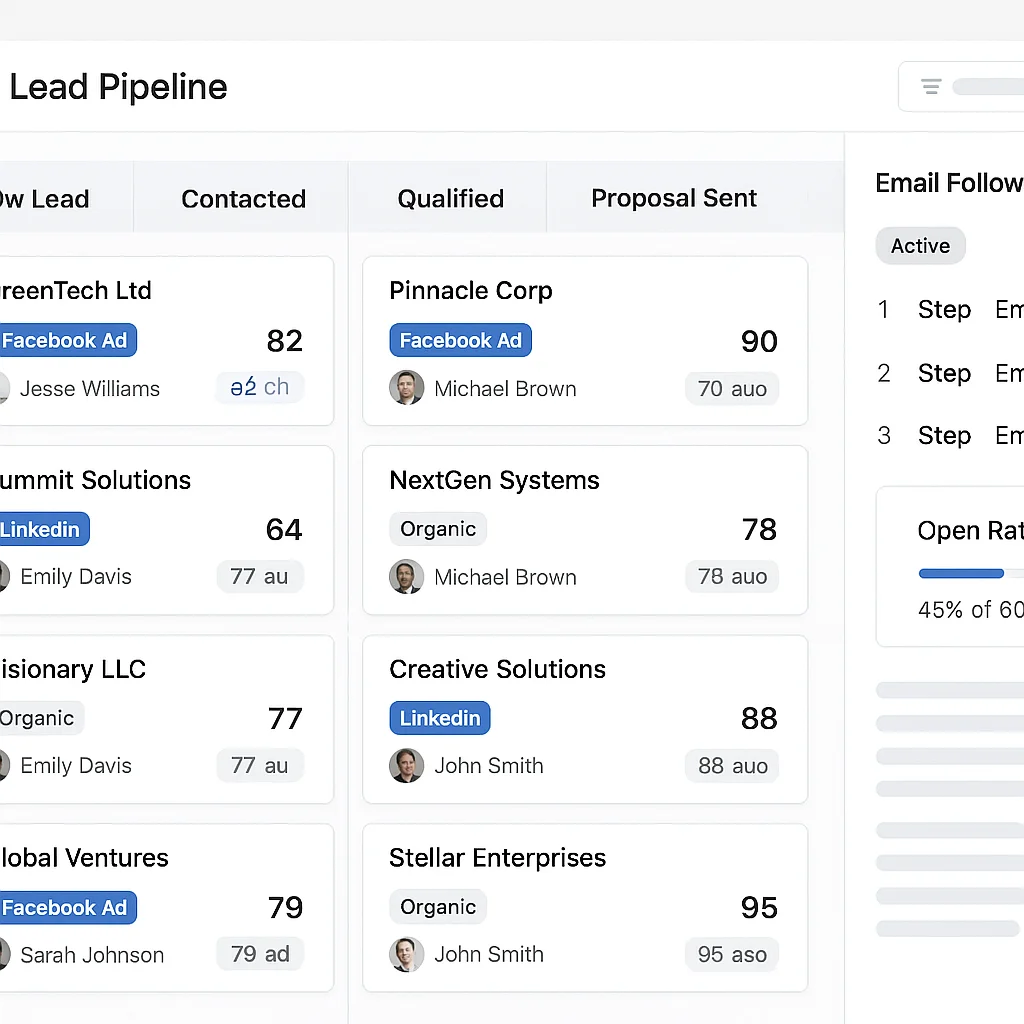
Most agencies treat lead generation and pipeline management as two separate problems. They're not. The gap between a lead entering your pipeline and someone actually following up with them — consistently, quickly, and with the right message — is where most agency revenue gets lost.
Here's how to build a lead pipeline that runs automatically from first touch to booked call.
Where agency pipelines break down
A lead fills in your contact form on a Tuesday evening. Your account manager sees it Wednesday morning, gets pulled into a client call, and replies Thursday afternoon — 40 hours after the lead expressed intent. By then, they've had three conversations with your competitors.
That's not a people problem. It's a systems problem. The lead entered your pipeline at a point no human was monitoring it, and there was no automated response to bridge the gap.
The agencies consistently winning on pipeline conversion have automated the gap completely. Every lead gets an immediate, relevant response regardless of when they submit — and they enter a sequence that qualifies them, builds trust, and pushes them toward a booked call without waiting for a human to remember.
The automated lead pipeline architecture
Stage 1: Capture and enrich
When a lead submits your contact form, a webhook fires to n8n immediately. n8n enriches the lead via Apollo.io — pulling company size, industry, job title, LinkedIn URL, and estimated revenue based on the email domain. This takes about 3 seconds and gives your sales team context before they ever speak to the lead.
The enriched lead is scored automatically. A 50-person marketing agency submitting a form about Discord automation scores differently than a solo consultant asking a general question. Scoring criteria are defined by you — we build the logic in n8n.
Stage 2: CRM entry and routing
Leads above the score threshold are created as contacts and deals in HubSpot or Pipedrive, placed in the correct pipeline stage, and assigned to the right team member based on service type or geography. Your team gets a Slack notification immediately with the lead's name, company, enriched data, and a direct link to the CRM record.
Leads below the threshold enter a nurture sequence rather than the active pipeline — keeping them warm without consuming your team's time on low-fit leads.
Stage 3: Immediate automated follow-up
Within 5 minutes of the form submission, the lead receives a personalised email acknowledging their enquiry, confirming what they asked about, and sharing a relevant case study or piece of content matched to their service interest. This isn't a generic "we'll be in touch" — it's a response that demonstrates you've read what they wrote.
This email is sent from your team member's email address, not a no-reply address. It looks like a human sent it. The lead's first impression of your agency is a fast, relevant, personal response — regardless of when they submitted.
Stage 4: Follow-up sequence
If the lead doesn't book a call within 48 hours, the sequence continues. Day 2: a case study relevant to their industry. Day 4: a short question that prompts a reply and creates a two-way conversation. Day 7: a direct ask for a call with two specific times offered. Day 14: a final follow-up before they move to long-term nurture.
Each email in the sequence is personalised using the lead's name, company, and the service they enquired about. The sequence pauses automatically the moment they reply or book a call — no one receives a follow-up email after they've already responded.
Stage 5: Booked call handling
When a lead books a call via Calendly, n8n fires immediately: the CRM deal stage is updated, the assigned team member gets a briefing notification with the lead's enriched profile and conversation history, a reminder email goes to the lead 24 hours before the call, and a reminder goes to the team member 30 minutes before.
No calls missed because of a missing calendar alert. No team member going into a discovery call without knowing who they're speaking to.
What this changes
An agency we built this for was converting 11% of inbound leads to discovery calls. Six weeks after the pipeline automation went live, that number was 29%. The leads hadn't changed. Response speed, consistency, and relevance had.
If you want this built for your agency, book a free strategy call. We'll map your current pipeline, identify the drop-off points, and build a system that closes the gaps.