Most B2B SaaS companies have the same problem with leads: there are enough of them, but converting them to paying customers takes longer than it should. The gap between "someone signed up" and "someone is getting value" is where trials die and churn starts.
Automated lead generation fixes the top of the funnel. But it only matters if the bottom of the funnel — nurture, trial conversion, and first-value — is built to match.
Here's how to build an automated system that covers both.
Automating lead capture and qualification
For SaaS, the most productive lead sources are usually inbound — trial signups, content downloads, webinar registrations, demo requests. Each one lands a lead in your system with different intent and different urgency. Treating them all the same is where most SaaS companies bleed conversion.
The automated qualification layer:
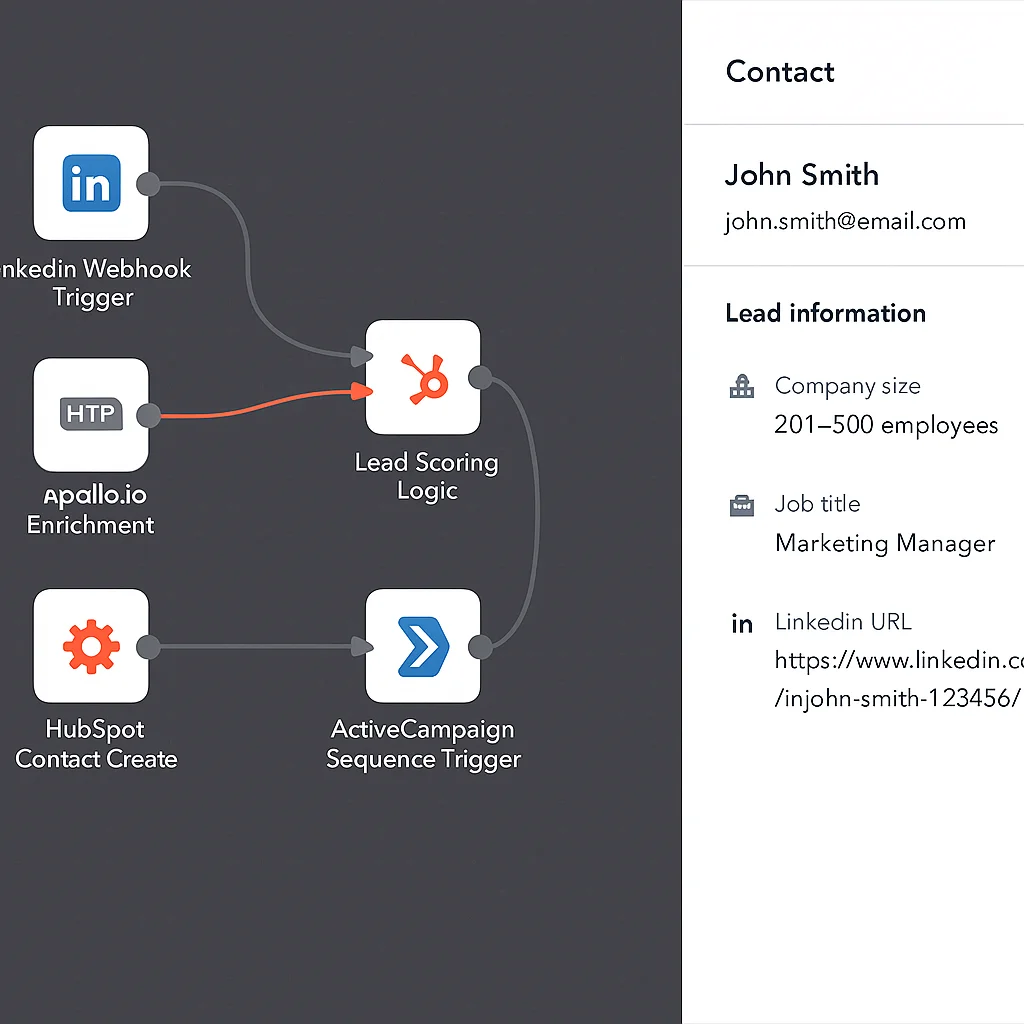
When a lead enters via any source, n8n enriches them via Clearbit or Apollo.io — pulling company size, industry, tech stack, and funding stage. This enrichment data feeds a lead scoring model: a series founder at a 200-person SaaS company requesting a demo scores very differently from a student signing up for a free trial.
High-intent leads (demo requests, direct contact form submissions) get routed to your sales team immediately with full enrichment data. Trial signups above a threshold score enter an accelerated onboarding sequence. Below-threshold trials enter a self-serve nurture sequence. Each path is defined by your ICP, built into n8n logic.
Trial-to-paid conversion automation
The biggest conversion lever in SaaS isn't your pricing page — it's your trial experience. Specifically, whether a trial user reaches their first meaningful value moment before their trial expires.
The automated trial sequence we build for SaaS clients:
- Day 0 — Welcome email with one clear action: the single thing they should do first to get value. Not a feature tour. One action.
- Day 1 — Check-in: have they completed that action? If yes (tracked via product event), send the next step. If no, resend the prompt with a different angle.
- Day 3 — Use-case specific content based on their industry or role (pulled from enrichment data). Shows them exactly how someone like them uses the product.
- Day 7 — Mid-trial review. If they're engaged (tracked via login frequency and feature usage), send social proof and a soft conversion nudge. If they're disengaged, trigger a personal-feeling check-in email from a team member's address.
- Day 12 — Trial expiry warning with a clear upgrade path and any relevant offer.
- Day 14 — Final day. Urgency without pressure. Clear CTA.
Every branch in this sequence is conditioned on actual product behaviour — not just time elapsed. A user who's been active daily gets a different message than one who signed up and never logged back in. n8n pulls the usage data from your product API or database and conditions every email accordingly.
Post-conversion onboarding
When a trial converts to paid, the onboarding sequence continues — because the work of reducing churn starts immediately at conversion, not at the 90-day renewal.
The automated post-conversion sequence: confirmation of upgrade with what's now unlocked, a structured first-30-days guide, a check-in at Day 7 from an account manager (automated but personal in tone), a milestone celebration when they hit their first meaningful usage threshold, and a proactive outreach at Day 25 before the first renewal.
All of this runs without manual intervention. Account managers are alerted only when a customer shows disengagement signals — so their time goes to retention conversations, not routine check-ins.
CRM and product data sync
The system only works if your CRM reflects what's actually happening in your product. n8n keeps HubSpot or Pipedrive in sync with your product database — updating trial status, feature usage, last login date, and health score automatically. Sales can see the full picture without logging into your product admin.
If you want this built for your SaaS, book a free strategy call. We'll map your current funnel and show you exactly where the conversion gaps are.